

Defamation, Barthes and the reasonable reader
Breakfast table fodder.


Today, I bring you an interesting, if sad, tale from the courts, as well as the very narrow intersection of sober English defamation law and heady French post-structuralist theory. Consider this your warning.
First, a story of misplaced keyboard warfare.
For years, an anonymous troll used “sockpuppet” accounts to torment Roy and Rianne Schestowitz, a couple who run not-for-profit websites connected to the “free software” movement. Distressed, and aiming to fight fire with fire, the couple went on the offensive. They posted a slew of vitriolic and defamatory comments about the person they believed was behind it all: Matthew Garrett, a software engineer who works at Nvidia.
Except, according to all available evidence, he wasn’t.
Dr Garrett asked them to take the posts down. They refused. And so all three ended up in court — and now the couple must pay him £70,000 in damages and take down the posts. You can read the whole sorry story in the judgment, if you like.
Reading the judgment reminded me of a feature of English defamation law that I’ve been turning over in my head lately: judges in defamation trials must work out what the potentially defamatory statement actually means, without necessarily considering the intentions of the publisher.
As may be familiar to many people who have followed a first-year English curriculum, the author is dead — or, at least, absent.
(A quick P.S.A.: I am not a lawyer, much less any kind of expert in defamation. This post consequently feels like something of a high-wire act. If you are an expert, and you spot problems with it — beyond what may be admissible for a general-interest newsletter, razzle-dazzle and all — please let me know! You can just reply to this email.)
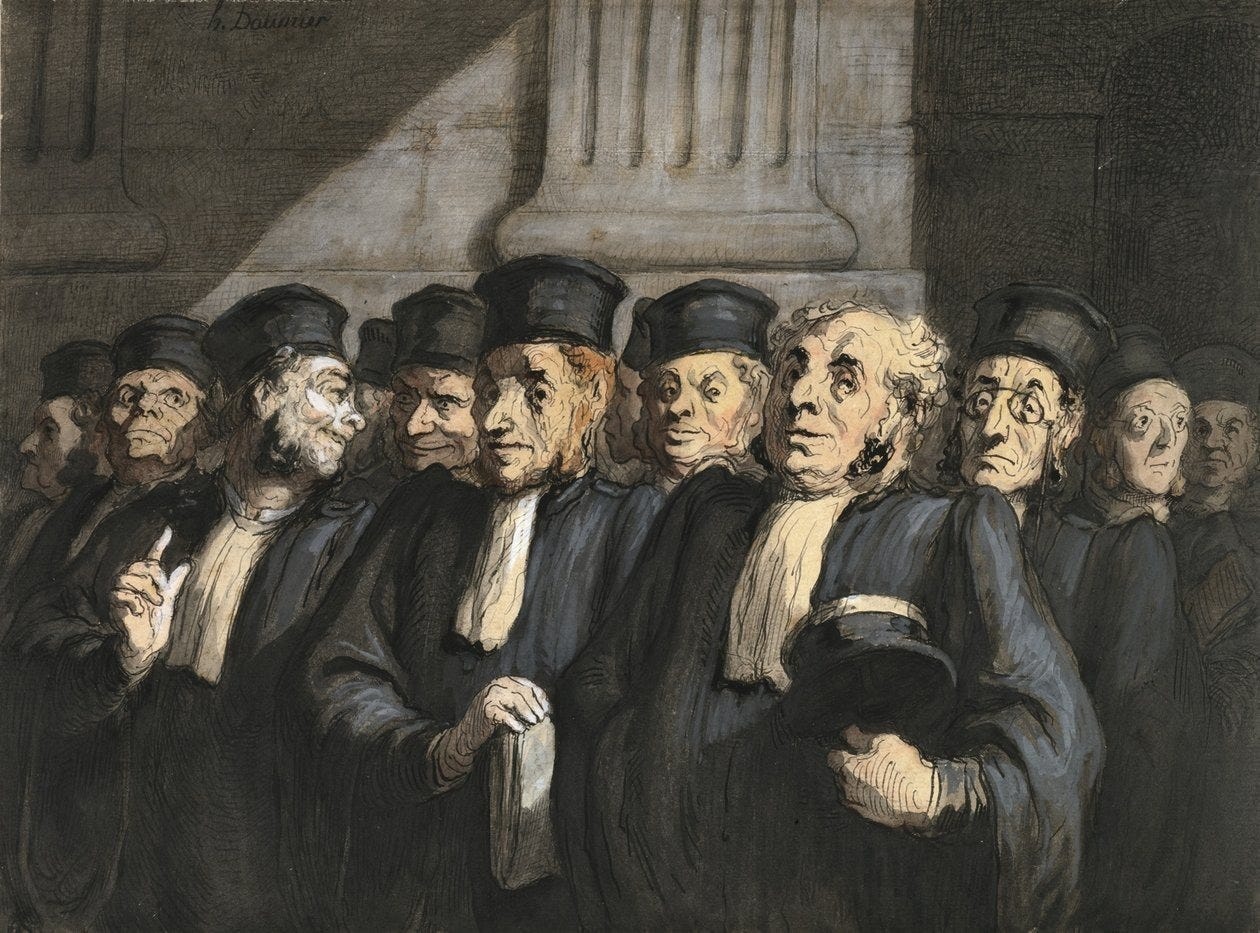
To find the “natural and ordinary” meaning of a text, of which there can only be one, the judge assumes the identity of the “ordinary, reasonable reader” — the Joe Bloggs encountering the tweet or Instagram story or headline1 over his toast and marmalade.
(Each party involved in the case will have brought their own interpretation of the meaning. One will probably be very damaging; the other most likely will not.)
We know quite a lot about my notional Mr Bloggs. He is not a lawyer, and so not inclined toward “over-elaborate analysis of text.” He may like a story as much as the next person — he can, after all, read between the lines and pick up whatever implication he might find there — but he is not “avid for scandal,” even as he’s allowed “a certain amount of loose thinking.”
When Joe Bloggs, breakfast enthusiast, reader and reasonable person, encounters a defamatory statement, he does not dwell on each individual word, but considers the sentence as a whole. He also does not pause to ponder what the publisher may have actually meant. And while he has some mind to the context, including any “hyperlinks” and so on, the publication is broadly its own world. He reads it once through, as it appears, takes a sip of tea, and forms an impression of its meaning.
One example: A journalist called an actor “hideously ugly.” What did this mean? It was found to give the impression that he was not “merely physically unattractive in appearance but actually repulsive.” (And yes, it was defamatory.)
Suppose Mr Bloggs is not alone at the breakfast table. He raises a few thoughts with Mrs Bloggs, fellow reasonable reader (the foundation of every stable marriage!). He wonders: is the text factual? How about a matter of opinion? Mr and Mrs Bloggs consider these issues, but not in a strictly linear or compartmentalised fashion. Even over their battalion of toast soldiers and perfect seven-minute eggs, they are wiser than that.
Mr Bloggs is, of course, a figment of my imagination designed to illustrate a legal principle. But having spent about a decade engaged in the business of publishing — and in successfully avoiding committing defamation — I have my doubts about how common such a reasonable reader actually is. One of Mr Bloggs’ established traits, for instance, is that he does not merely read the headline. As any reporter who has been hauled over the coals by an angry mob about a headline they did not write can tell you, this already places him in a definite minority. It may also speak to his inception at a time before paywalls.
(If you’re wondering what Mr Bloggs made of the posts about Dr Garrett — well, there were quite a few of them, and I’d prefer not to repeat them lest I wind up in the Schestowitzes’ shoes. Read the judgment if you’re curious.)
The Bloggses’ reading exercise, done without a mind to the intentions of the publisher, reminded me of the classic 1967 essay “The Death of the Author,” by Roland Barthes.

If you haven’t encountered it before, the essay essentially argues that the meaning of the text is to be found in the text, rather than in the imagined mind of the author, with all relevant biographical details. It puts paid to every eye-rolling student who has whined that such-and-such an author surely did not mean whatever laboured “symbolism” may be suggested by the GCSE textbook.
In fact, Barthes and defamation law are “killing” the author in exactly opposite directions. Barthes does so to open up a universe of meaning; defamation law excises the publisher to narrow it down to just one. “Once the Author is gone,” he argues, “the claim to ‘decipher’ a text becomes quite useless.”
Barthes concludes: “The birth of the reader must be ransomed by the death of the Author.” Such does the absence of the publisher give rise to the presence of the reasonable Mr Bloggs, hero of the breakfast table. If they share anything at all, then, it is the understanding that once words are loose in the world, they belong to their readers.
Natasha
P.S. Thanks for bearing with me. Here’s a video of a mother bear attempting to transport her cubs across a road.
STUFF YOU CAN EAT

I always enjoy the Vittles gift guide, and this year is no exception. £10 is extraordinarily good value for a hand-felted tree pickle thing, in my opinion. She has After Eight mints, too.
A classic (in our house) for a reason: Meera Sodha’s yaki udon with red cabbage and cauliflower.
One of the best vacation foods I ate this year was torrijas - Spain’s answer to French toast. It is very decadent. This recipe looks decent.
Art inspired by King Charles’s favourite sandwich (“a fried egg, pesto, gruyere cheese and Marmite in an organic granary bap”) which sounds very messy.
EVERYTHING ELSE
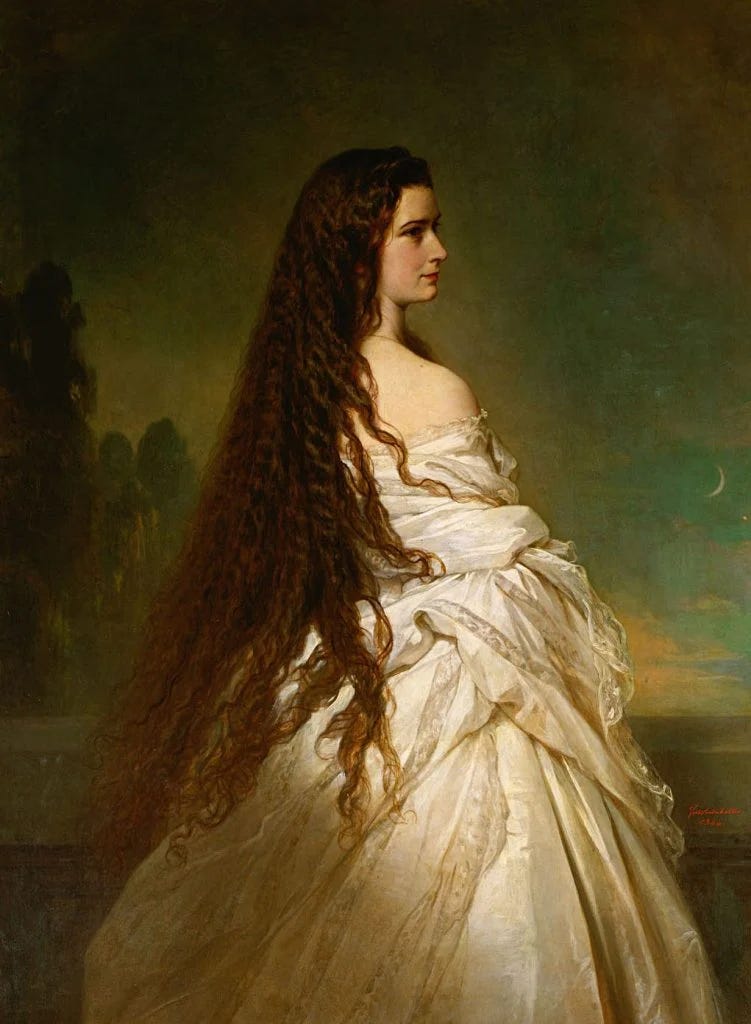
Enjoyed this post about “the most famous hair in the world.”
The irresistible rise of make-believe furniture.
Where is the exact centre of London?
I don’t think this poet likes lawyers very much.
No, menstrual periods don’t sync up.
Or, yes, the blog. Blogs.