

Inside the London Silver Vaults
Shopping for the person who has everything.


The adverts that line the 450-odd escalators of the London Underground are highly localised, and they tell on the stations’ regular clientele. At Oxford Circus, you get promos for West End shows; at Brixton, it’s horrible-looking cocktails in a round can, a.k.a. BuzzBallz. (These were the “undisputed drink of the summer,” yet somehow I’ve gone all year without trying them, which might tell you a thing or two about my summer.)
Over the last couple of weeks — hello, how nice to see you all again — I’ve thrice been drawn into the bowels of the Chancery Lane Tube stop. Located in the heart of legal London, the clue is in the name: “chancery” is an English-y term that nowadays refers to a certain sliver of the commercial legal world — property disputes, land, trusts, estates, and so on. It derives from “chancellor.” No, you won’t find ads for BuzzBallz, the Devil Wears Prada musical or Uber Eats.
Instead, on my last visit, every single advert along the Chancery Lane escalator touted the “London Silver Vaults” as the destination for Christmas shopping. With a rare free Saturday morning, I decided to pay them a visit.
Onetime students of chemistry may recall that the symbol for silver is “Ag,” from the Latin argentum. It’s from here we get “argentine” and “Argentina,” with its mythic rivers and mountains of silver that were — whoops — actually in Bolivia instead. Some say the word is related to “argue”: the Latin arguere, meaning “to make clear, make known, prove,” may derive from the same arg– root, meaning “to shine; clear; white.”
When you argue, the theory might go, you make things as clear as silver, though more often only as clear as mud.
Setting aside such poetic matters, silver is now extremely useful in solar panels, circuit boards and so on — and it’s from these industrial uses that it derives much of its value. For early humans, who found it unusable for tools, cooking vessels, or actually anything practical, silver was valuable essentially because it was heavy and beautiful, and you could use it to make shiny things that looked nice.
In the London Silver Vaults, it’s as if “critical minerals” never existed. Down here, silver is still mostly about lovely, heavy things that catch the light.
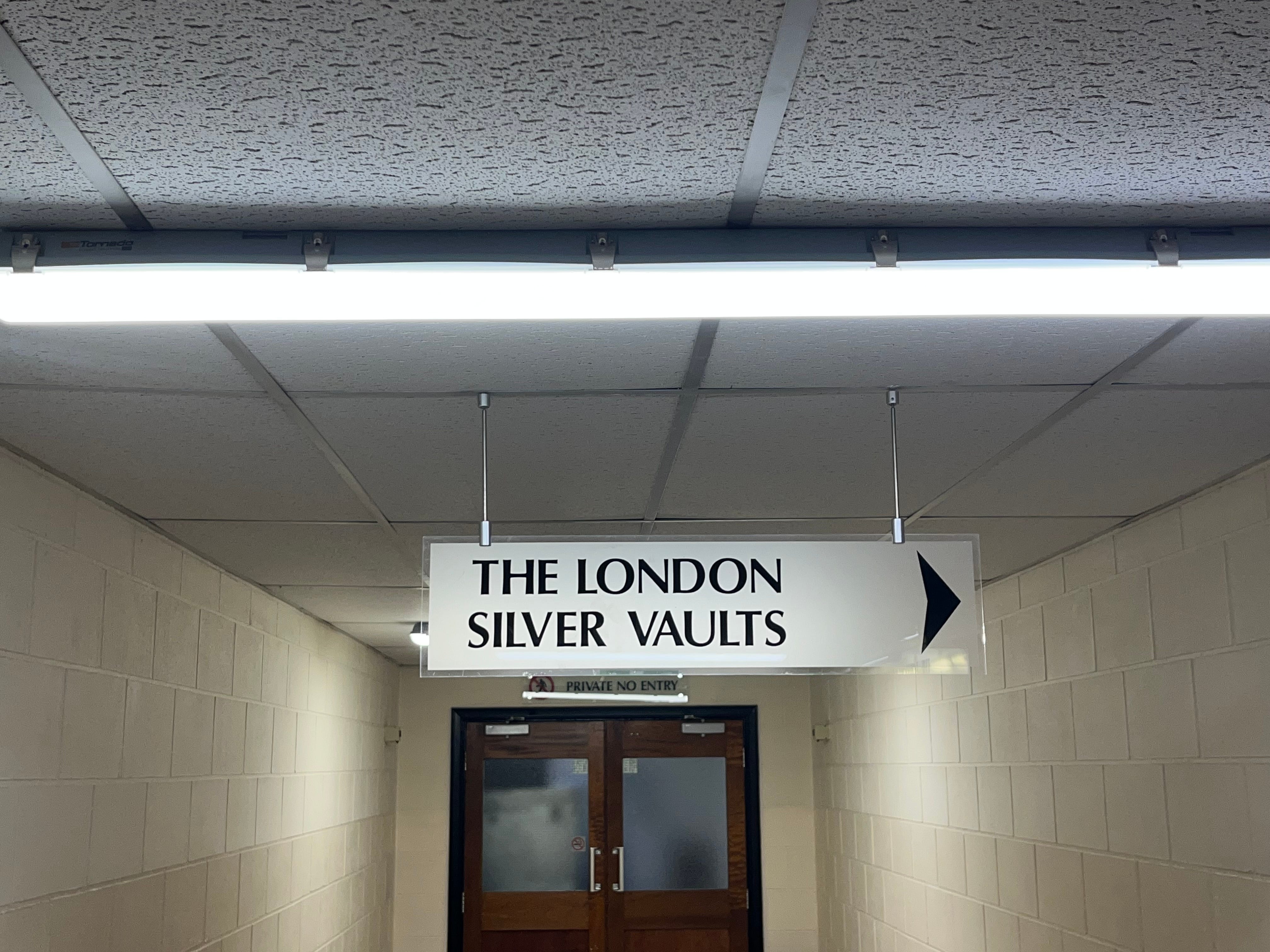
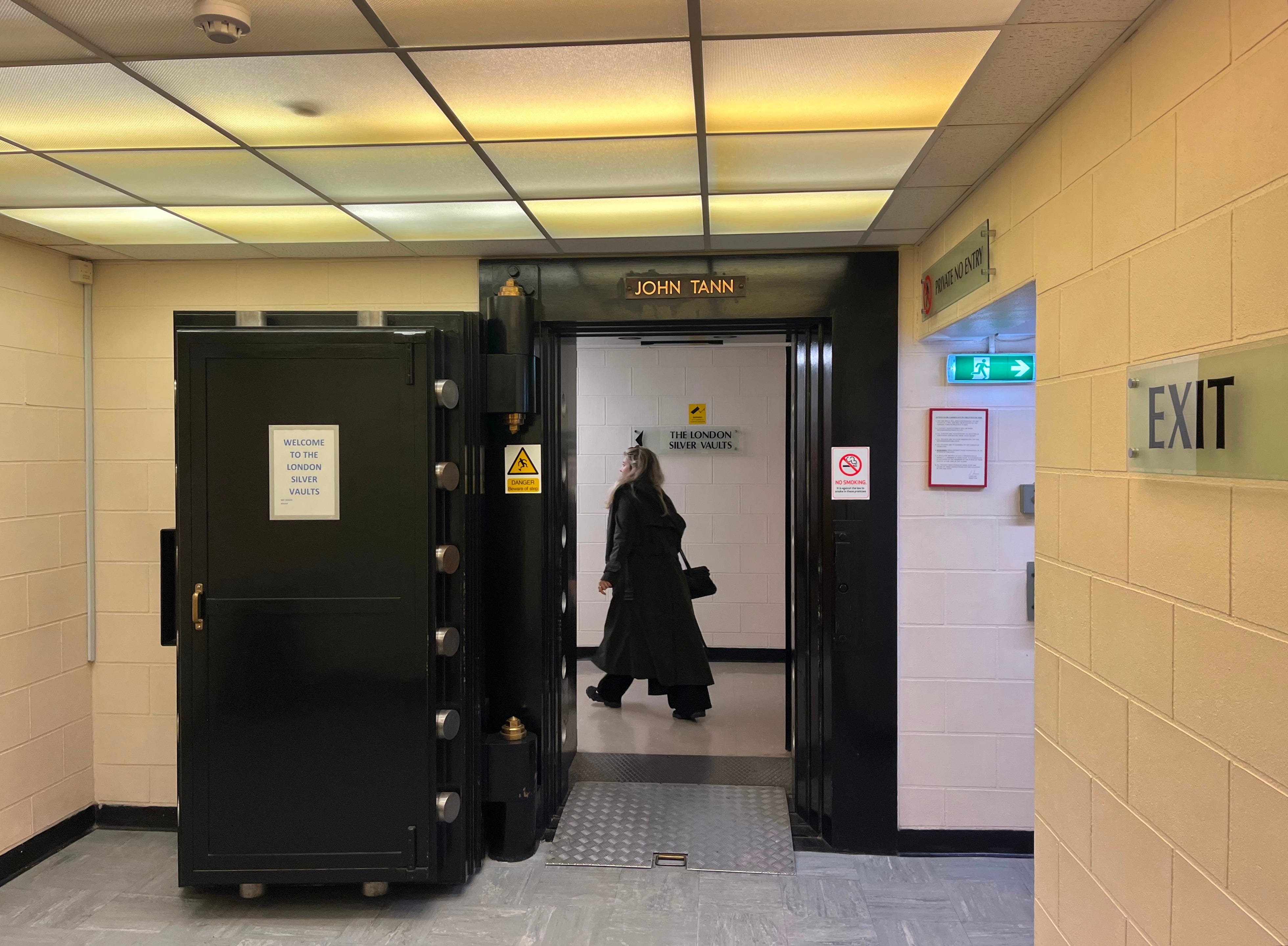
You enter the Vaults through an unprepossessing modern building, where they search your bags on the way in (so perhaps leave the bolt cutters at home). Down the stairs. Linoleum. Fluorescent lights. Drop ceilings. A woman in a swoopy coat looking for the loo. It has all the atmosphere of being beneath the gymnasium of a minor public school, if not for the paraphernalia littering the halls. Glass cabinets of silver trophies, and — is that a pair of silver-encrusted horse’s hooves? On the walls, framed newspaper clippings (“Please don’t be beastly to our American friends,” one headline reads). A cover of Spear’s magazine (“news on wealth, business, culture and luxury, for ultra high net worths and the people who advise them"), displaying an illustration of the Vaults by the official artist of Britain’s 2015 general election. Against a wall, the prize medal safe from the Great Exhibition of 1851. Of course.
Turn the corner. Now you’re in a strange underground arcade: rows of shops that look like prison cells, with iron-lined doors multiple feet thick, their walls lined with gleaming silver goods. This is where the fun begins. Here you might find a silver lid for your mustard pot, or a coconut and silver cup from 1800 (helpful tag: “colonial”), or, for the discerning consumer, a nine-inch model of a champion racehorse who competed only seven times then retired to life as a stud, as well as thousands of random other silver goods that you can and actually cannot imagine.

These are the Silver Vaults. You’ve made it.
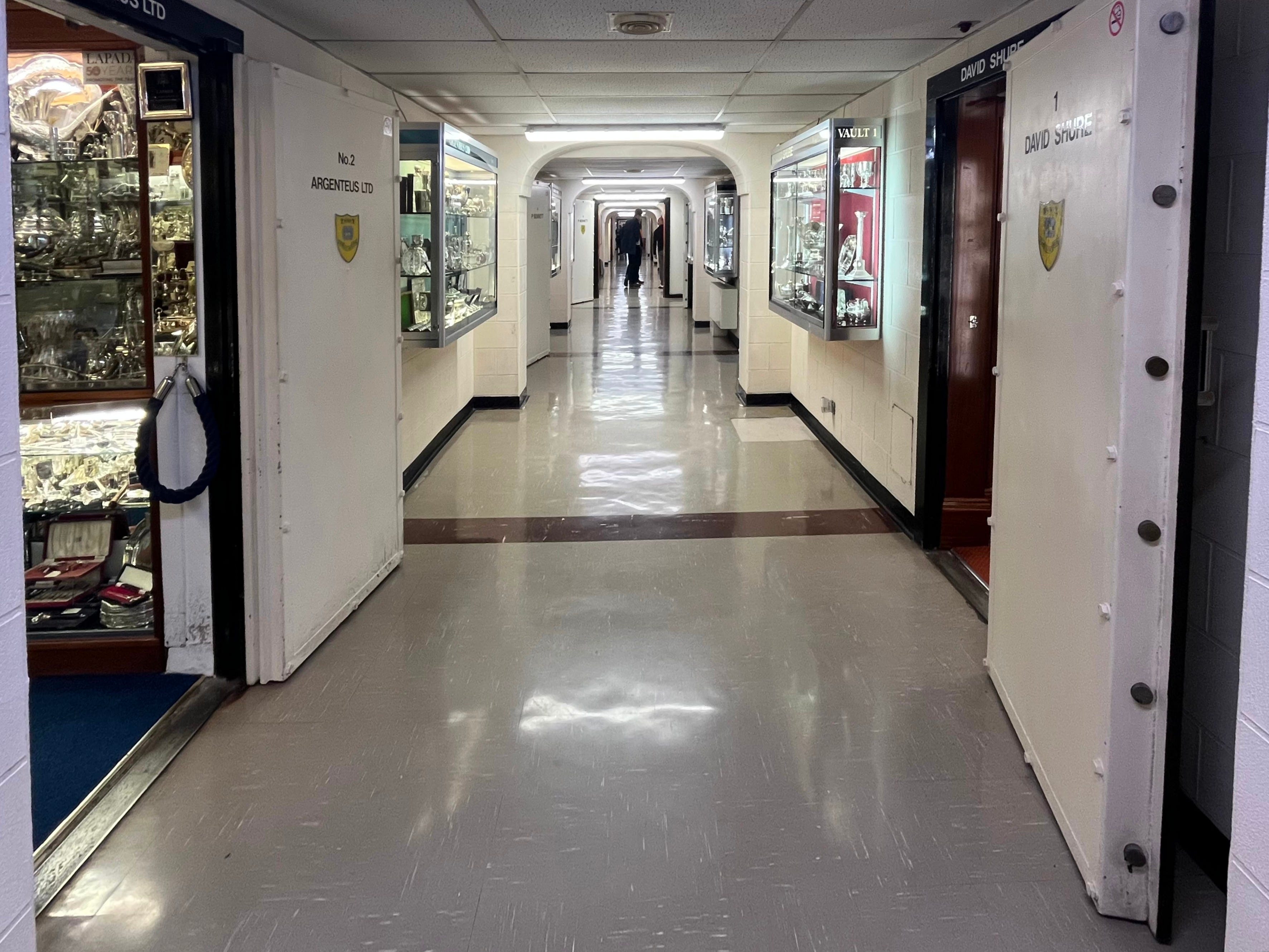
The London Silver Vaults, then the Chancery Lane Safe Deposit Company, opened for business in 1882. Then the country’s “second non-bank private safe depository,” they catered to those heading off on a colonial jaunt or merely worried about London crime — plus ça change ! — who had things to protect and who might be comforted by the promise, per one 1884 advertisement, of “night watchmen with revolvers” outside those foreboding iron doors.
By the 1930s, the wealthy had mostly moved on. A decade or so later, a massive World War 2 bomb blew the building aboveground to smithereens. Only the vaults below survived. At some point in the 1950s, the predecessors to today’s stores opened in the former subterranean strongrooms.
Nowadays, you have essentially two corridors of antique shops that mostly sell silver, which is a very underwhelming way to tell you that I was surprised and delighted by basically everything and everyone I encountered in these weird and wonderful halls.
The Silver Vaults are not, as The New York Times observed in 1985, the place to find “a $10 gift for Aunt Bessie in Boise.” They are, however, a good place to secure a £2,750 etrog box (a ceremonial citrus fruit used during the Jewish festival of Sukkot) ahead of next year’s festivities.
(A sidebar: though London’s Jewish population is relatively small, at around 150,000 people, there is a lot of Judaica for sale at the Vaults. This relates to a Jewish principle — hiddur mitzvah — the gist of which is that your ritual objects should be as beautiful as possible. On that note, if someone would like to buy me this £9,550 brutalist Chanukiah and Shabbat candlesticks set, I will not be upset. If you work out the annual cost over a lifetime, it’s actually quite thrifty.)
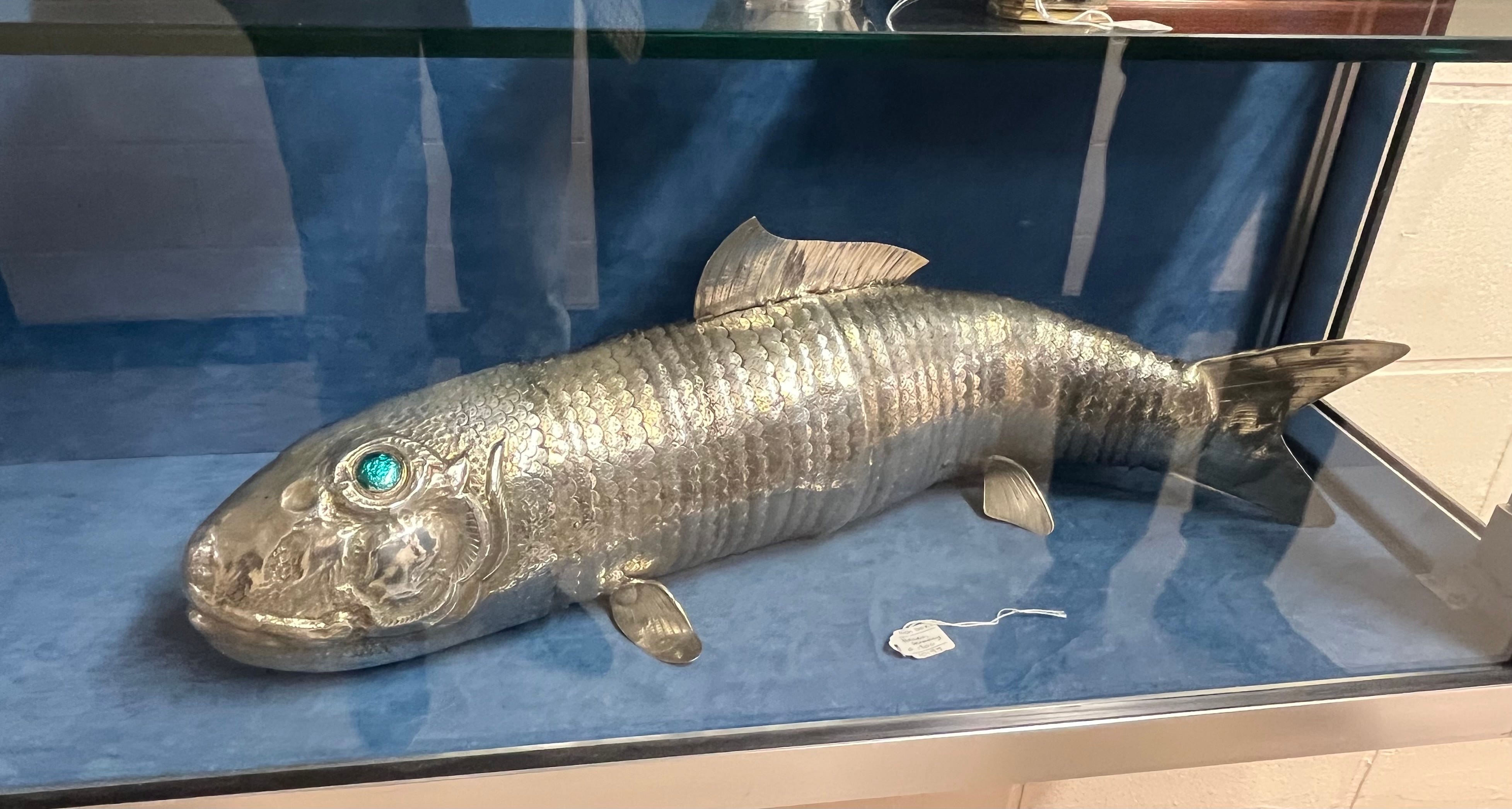
How many strange and fabulous objects can I list? How long is a piece of string? How have I gone so long without a giant silver fish box with “naturalistic engraving,” apparently articulated scales and unblinking enamel blue eyes? How can the world’s largest silver spoon (“It’s decorative.”) still so obviously be a teaspoon? How much would you have to pay me to have this horrendous X-rated cigar cutter in my home?
So many questions. And one last thing for you to think about: on the floor of the frigid Atlantic, amidst the wreckage of the Titanic, lie the moldering remains of a silver duck press.
This is a culinary contraption into which you put the carcass and innards of a cooked duck, after you have carefully removed its magrets and any other useful and more obviously edible bits. A white-shirted waiter locks it in its silver bell jar, then spins a wheel on top to squeeze out the last bloody juices from its bones, as an extravagant, if gory, tableside performance. You emulsify it with butter to make a sauce. Here’s a video.
Probably no one will ever see the Titanic’s duck press again — but its “pair,” complete with maritime-inspired wheel, can be found just a couple of minutes from the Chancery Lane tube stop. I didn’t ask how much it cost — it didn’t seem relevant — but apparently it’s quite easy to clean, so no worries on that front.
I left empty-handed, alas, but with very light spirits. You should go.
Natasha
P.S. Many thanks to those who sent me facts. A few I liked:
Italian comic books are called “fumetti,” apparently because the speech bubbles look like smoke clouds.
Nigeria is the second-largest consumer of Guinness in the world.
Japanese has a whole category of words called “English made in Japan,” which are transliterations of phrases “from English” that don’t actually exist - e.g. bebī kā (baby car) for a stroller/pram, and pēpā doraibā (paper driver) for someone who has a driver’s license, but can’t really drive.
Cleopatra’s lifetime was closer to the present-day than to the construction of the Great Pyramids of Giza.
STUFF YOU CAN EAT
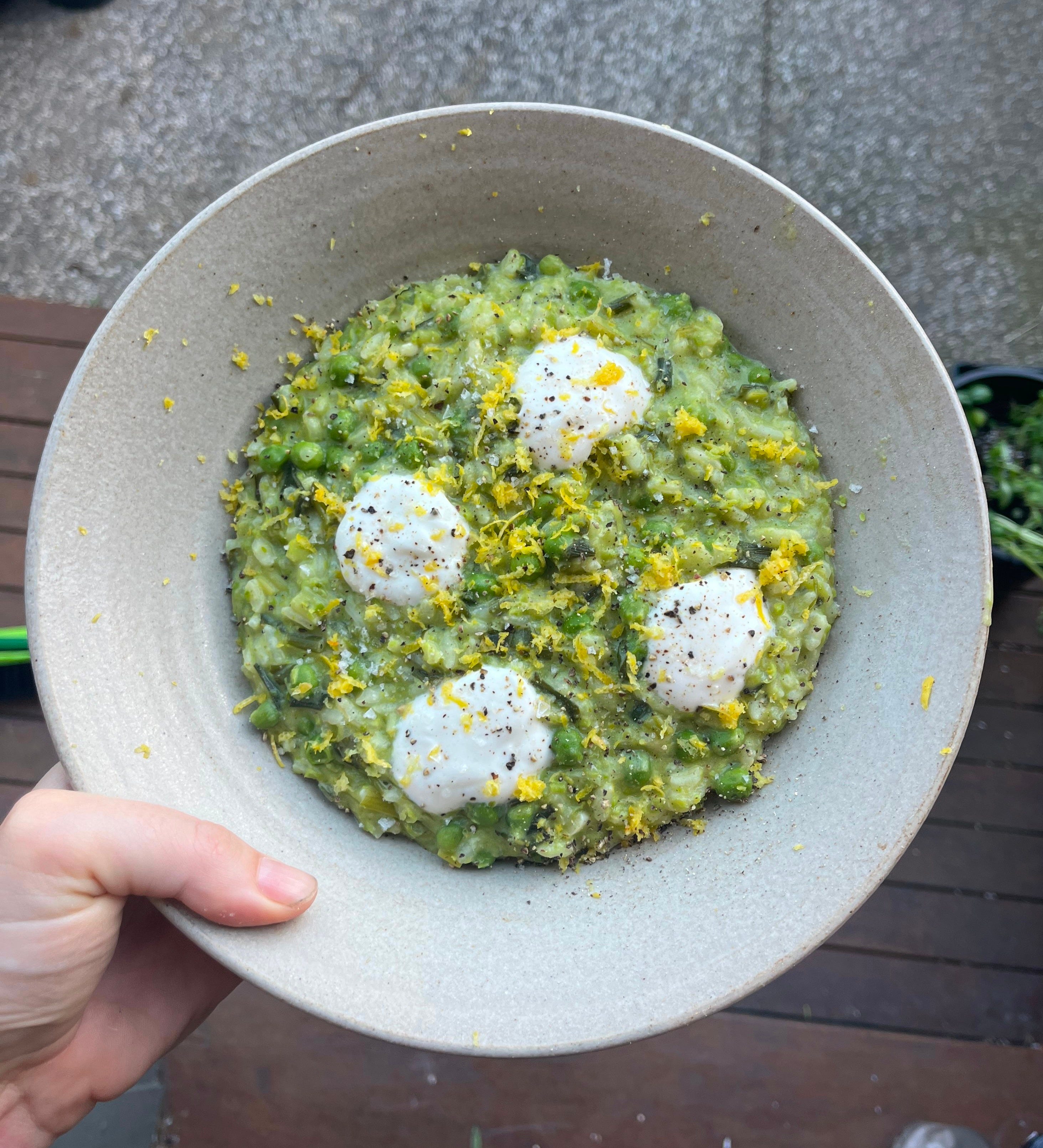
Very pleasing colours in this River Café pea and ricotta risotto. Yes, it’s a bit summery, but what are frozen peas for if not pretending?
I can’t really believe I’ve never mentioned Liu Xiaomian, a Chongqing noodle shop under The Jackalope pub in Marylebone, before. It is far better than it really needs to be, and the pub is surprisingly good too.
If I were in Melbourne, I’d be eating Pakistani food outside Al Nawab on Bridge Road or hand-pulled noodles at Xinjiang Lamian. This big, bright, beautiful Tiger Salad recipe is an adequate stand-in for the latter!
Some vegetable-y recipes to warm cooling days: gingery butternut squash and tomatoes; Ina Garten’s cauliflower toasts (I did mine without prosciutto, and with quick-pickled red onion and a bit of mustard); black pepper tofu and eggplant.
Big flat mushroomy pie quick enough for a weeknight. You could add blue cheese.
While we’re here, doesn’t it feel like time for broccoli and stilton soup?
I made Spanish sopa de ajo — garlic soup — in preparation for a forthcoming Lunch Date. It was sufficiently unpleasant that I will not be sharing the recipe. I hold myself responsible.
EVERYTHING ELSE
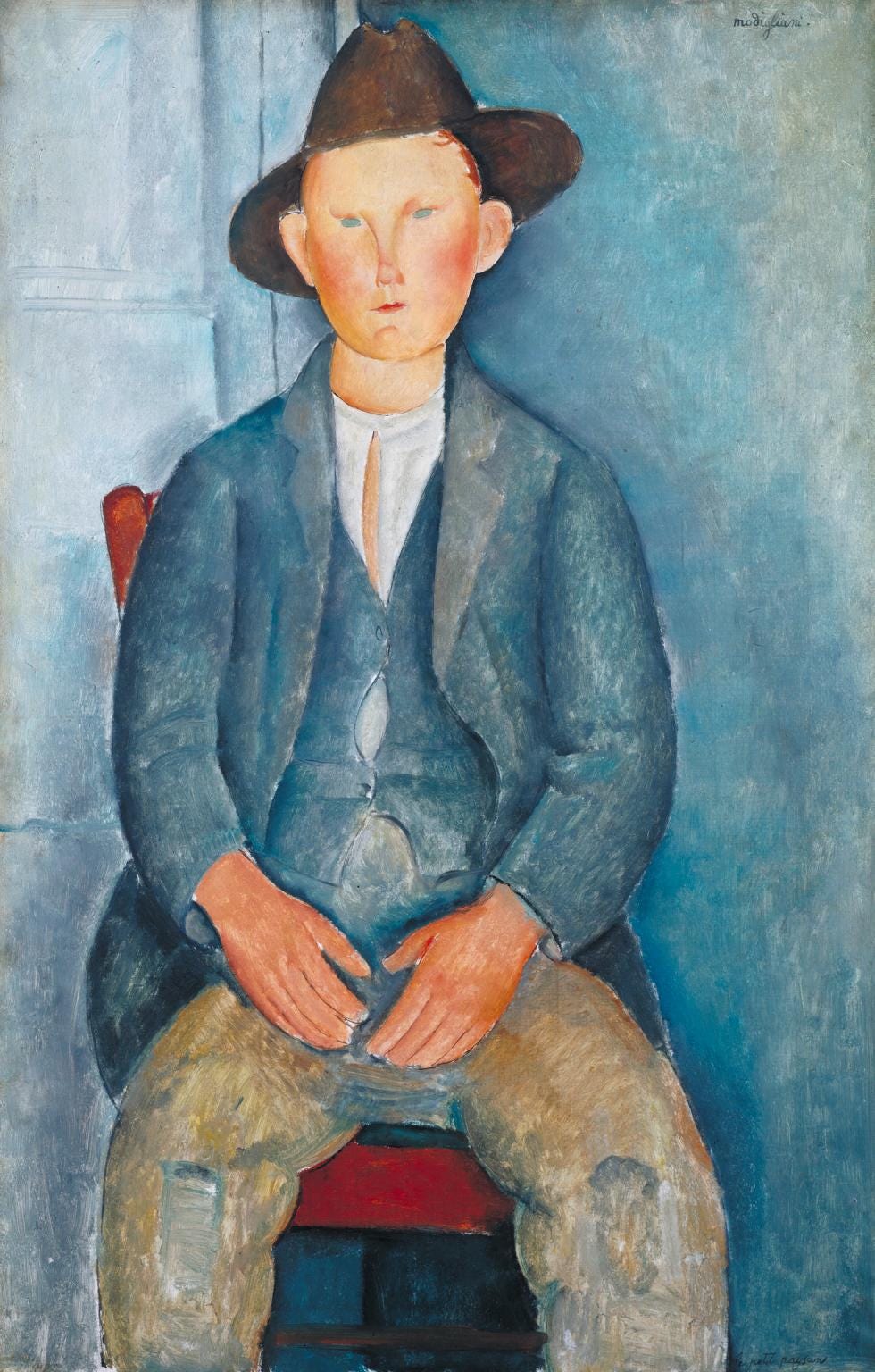
Many big London galleries are open late (until 9 p.m.) on Fridays and Saturdays. It’s very nice being alone with the subjects of the National Portrait Gallery or in Turbine Hall in the dark. I enjoyed spending some time with Modligiani’s “Little Peasant,” above. There’s something sublime about the peach hitting the cerulean.
Lots of interesting live music in the last few weeks: cellist Seth Parker Woods; the extraordinary free-jazz duo Wadada Leo Smith and Vijay Iyer; back-to-back Thomas Larcher concerts; then the very expressive Austro-Iranian cellist Kian Soltani, whom my pensioner seat-mate accurately described as “handsome.”
Re: Thomas Larcher — I commend the very beautiful text of “Lyrical Lights,” by Roy Nathanson and Jeff Friedman, to people who love New York City. It’s on Page 3.
I love absolutely everything about the Lily Allen divorce album, especially “Madeline.” Please send me lore, takes, memes etc.
Cute fireflies feature of mine in The Guardian. 💡
You’re a recently bereaved Victorian with money to burn who worries your loved one’s corpse might get stolen by grave robbers. May I present: the iron coffin.
In shopping news, I became obsessed with this black velvet minidress from Prada — very Wednesday-Addams-meets-Pauline-Fossil. Because I have more pressing things to spend £2,600 on, I sadly couldn’t and didn’t buy it (nor this H&M dupe). Instead I found this LK Bennett dress, one standard deviation away, second-hand on Vinted.
The word “coquetier” in French means both “egg seller” and “egg cup.” For some reason this amused me. It’s giving Humpty Dumpty.
Poem about a piggy house purchase in Japan.
Hehe loved learning about the silver vaults! Always so good ❤️
Decades ago I coveted, but didn’t buy, the most beautiful art
deco silver cutlery canteen there, because I had « better ways to spend three thousand pounds ». It has felt like a mistake ever since.